Month: April 2009
-
New Orleans Voodoo deck
Glassman’s ‘New Orleans Voodoo’ deck The New Orleans Voodoo Tarot, based on the stunning paintings by Sallie Ann Glassman, stirred some controversy when it appeared in 1992. Some questioned the wisdom of this heady blending of Kabbalah, Vodoun, and Santeria with modern occult philosophy. But they rarely doubted the power and beauty of Glassman’s visionary…
-
Deviant Moon Tarot
Frankly this tarot wipes the floor with any other so-called gothic or urban decks. Interestingly this is because it nods firmly in the direction of the Marseilles and surrealist traditions- both currently unfashionable in the English-speaking tarot scene. The ingredients really shouldn’t work: bold computer graphics, collage, an eighties goth/industrial sensibility, humour, and a desire…
-
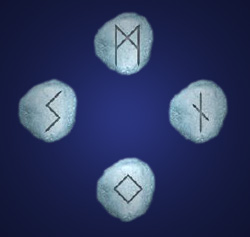
Runes
Elder (Germanic/Viking) Futhark The Runes are an alphabet originating in Scandinavia. Their distinctive sharp lines are because the symbols were originally carved into objects rather than painted. Over the course of time the alphabet has evolved, so that nowadays there are distinct versions of it. This is the Elder Futhark, the oldest version known,…
-
Rider-Waite deck
Also known as the “Rider- Waite-Smith” Deck The story of the artist of this most familiar of Tarot decks is seldom known. Pamela Colman Smith was an active member of The Hermetic Order of the Golden Dawn- a founding movement of modern Western esotericism. She brought with her a background in Swedenborgian mysticism, Jamaican folklore…